A 144" wheelbase Sprinter that the customer drove down from Bellingham as a bare cargo shell — no insulation, no walls, no electrical. The plan was to spend the winter at the Yuma lot getting the rig built up, then drive it back north in March ready for a summer of Pacific Northwest boondocking. We handled the electrical package; the customer brought in a separate carpenter for cabinetry and a sleeper-platform builder for the bed.
What the customer arrived with
The van had a roof rack already mounted (good — gave us a known load path for the array), and the customer had bought the panels, the inverter, the battery cells, and most of the wire ahead of time based on a parts list we'd built together over a few weeks of phone-and-email design. They'd never wired a vehicle before. Our brief was: do the work, but talk through every step so they understand what they're driving home with.
What's in there now
- 600 W rooftop array — two 300 W panels under the existing rack, cable run inside a roof boot to a junction in the headliner
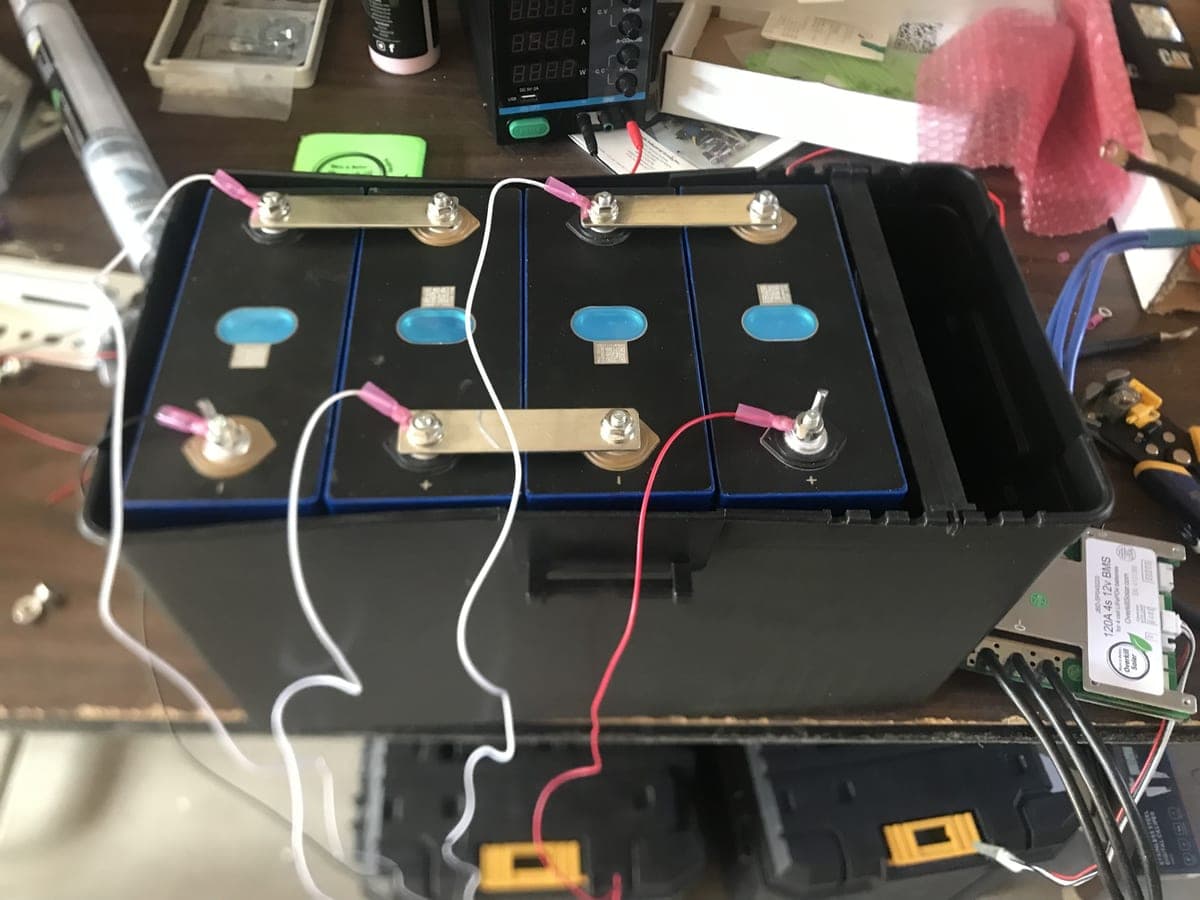
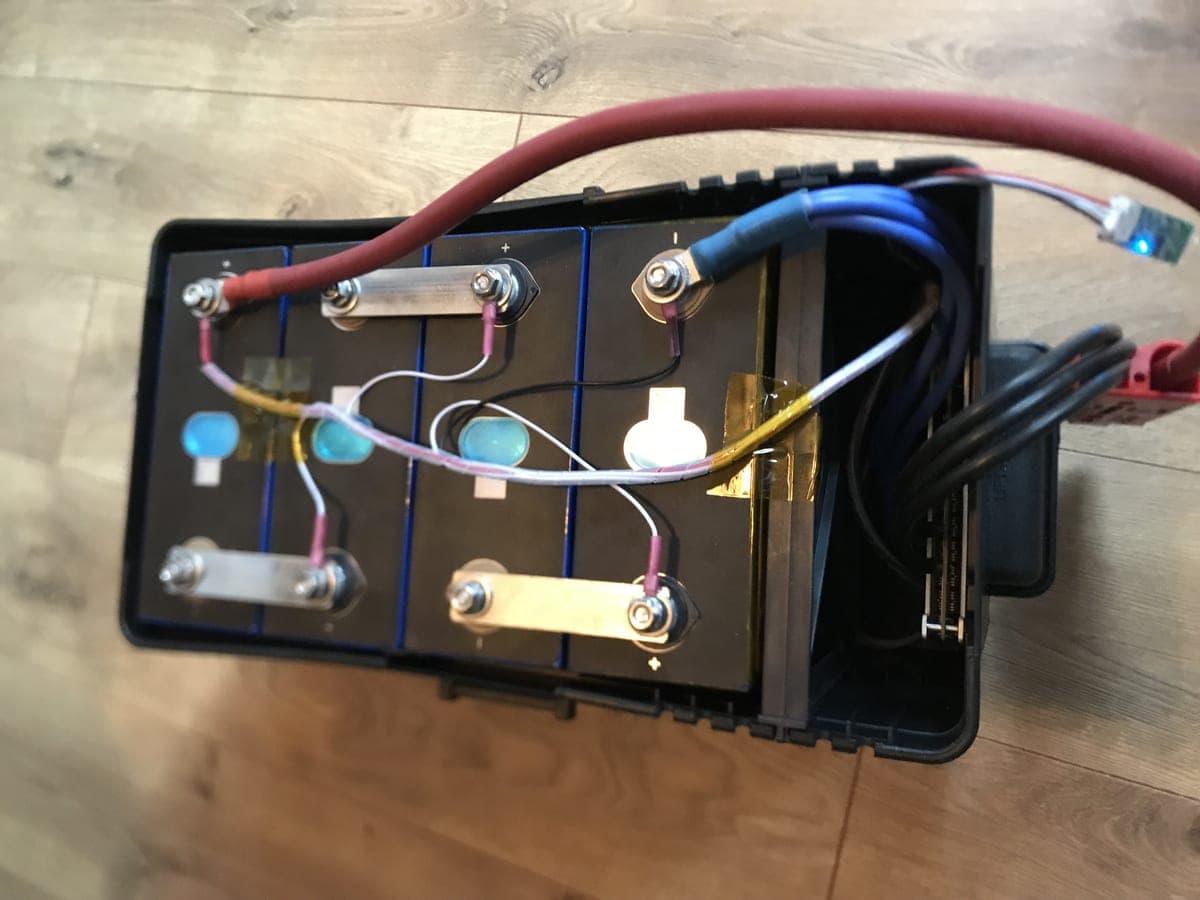
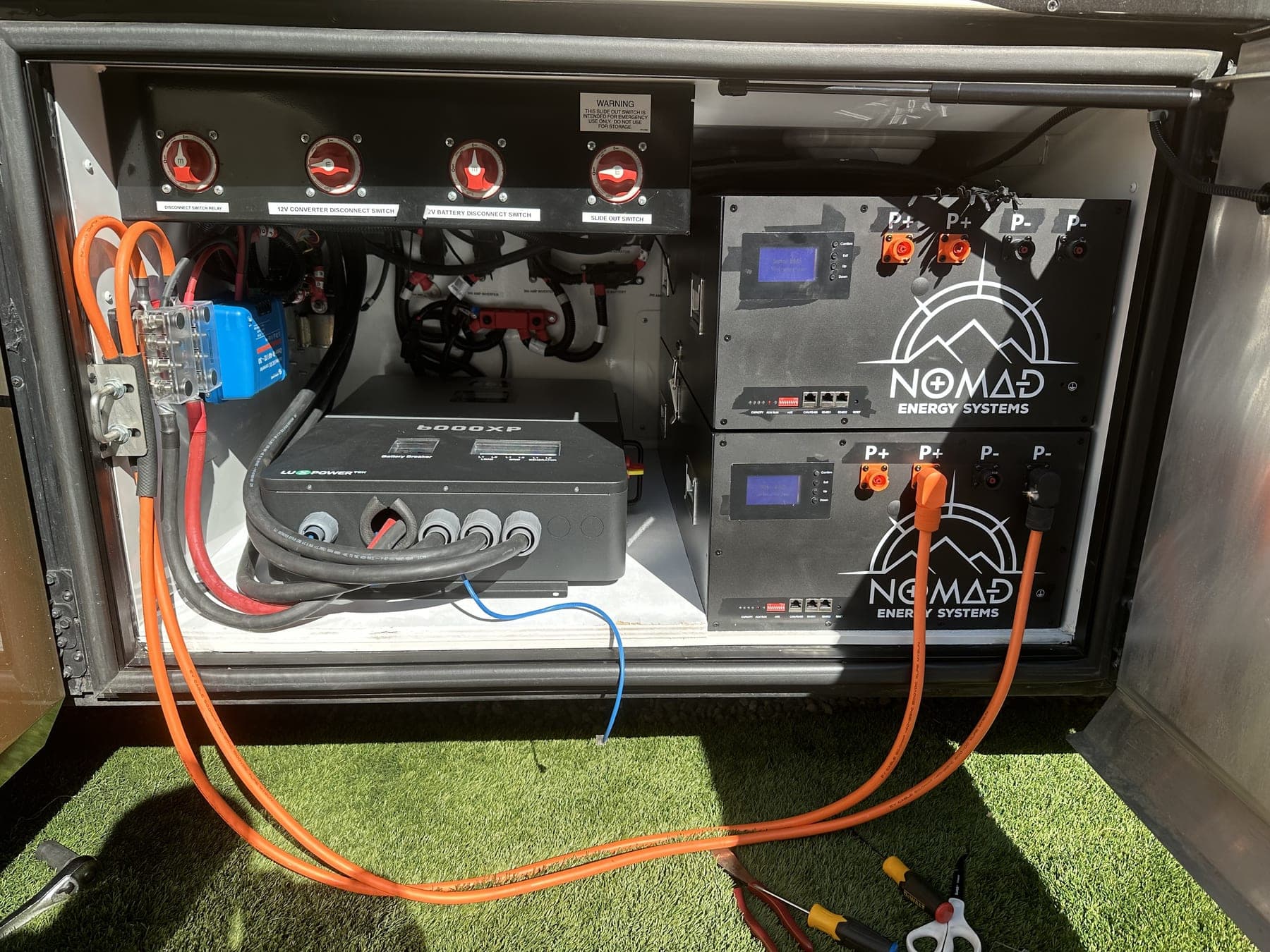
- 300 Ah Nomad Energy Systems bank — built on the workbench from the cells the customer had stocked, balanced for two days before going into the rig, mounted under the bench seat with low-temp cutoff routed through the chassis battery sense line
- MultiPlus-II 12/2000 — pure sine, runs the induction cooktop the customer plans to install, charges from shore at 80 A when they do hit a campground
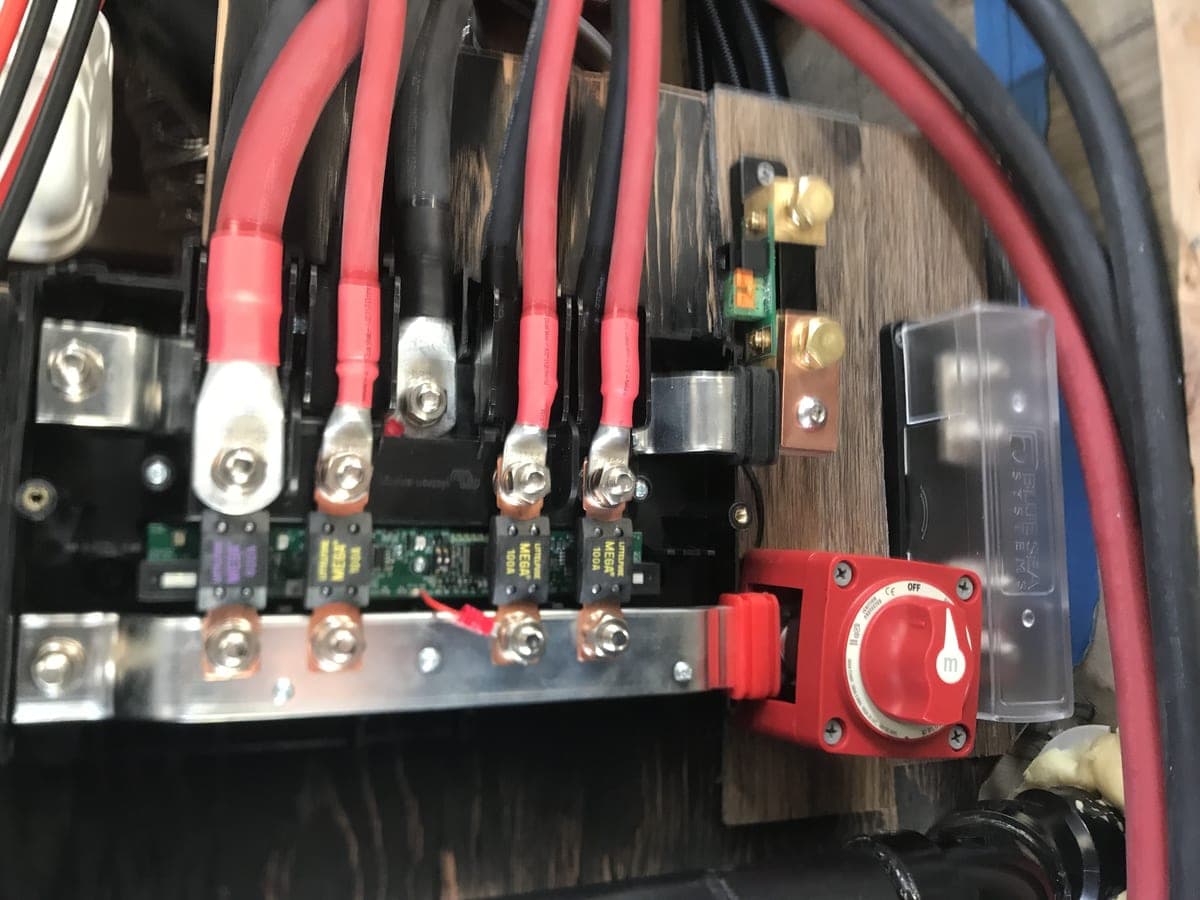
- Orion-Tr Smart 30A DC-DC — 4 AWG run from the chassis battery through the engine bulkhead, properly fused at both ends
- SmartShunt + Cerbo GX — basic telemetry, mounted in the cab bulkhead so it's visible from the driver's seat
What changed for them
The customer left Yuma with a system they'd watched go in piece by piece, a documented wiring diagram they could read, and a parts inventory of every fuse, every connector, and every length of wire on the rig. Six months later they sent a note from a forest-service road in Washington — the system had carried them through a two-week stretch off-grid in heavy shade with no issues, and they'd swapped a blown fuse on the DC-DC themselves using the spares we'd packed in the cab.
Why we did it this way
The 12 V architecture matched the simplicity the customer wanted for a first-time conversion. The MultiPlus-II 2000 sized to the induction cooktop they planned to install rather than to the loads they had on day one — a small overspec that means the inverter isn't running near continuous capacity at peak draw. The walk-through-while-building approach was the customer's request and shaped the schedule; a faster install would have skipped the parts that became the most useful to them later.
Build notes
Six days at the Fortuna Foothills lot. Day one: van inspection, final parts audit, panel layout planning. Day two: rooftop array and roof boot. Day three: battery assembly on the bench, balanced overnight. Day four: bank install under the seat, positive distribution, Class-T bus. Day five: MultiPlus and DC-DC. Day six: commissioning, telemetry walk-through, and a long shakedown drive out toward the Imperial Sand Dunes with the customer driving and watching the system behavior under real road conditions.