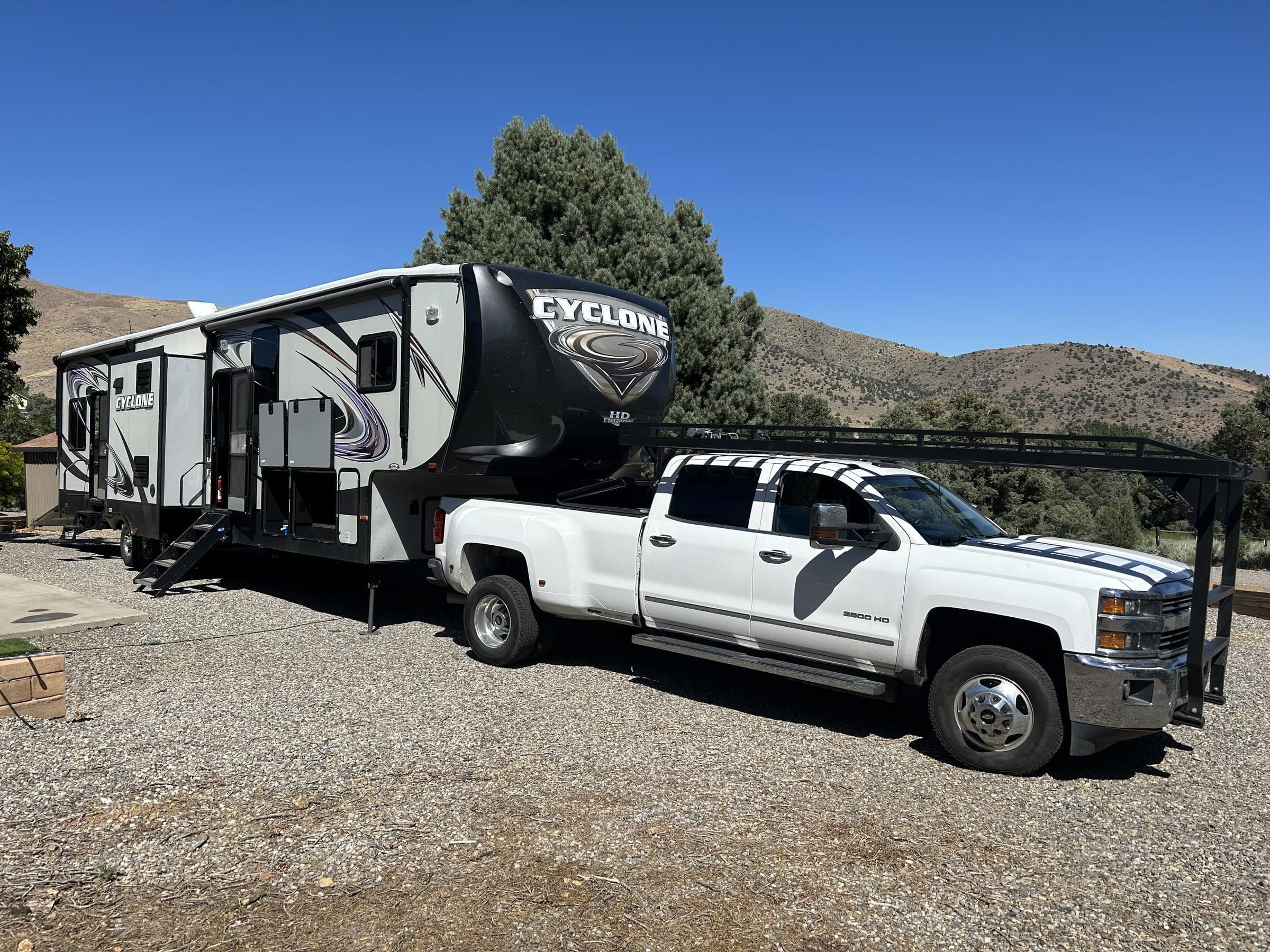
A 41-foot toyhauler that spends June through September boondocking between Tom's Place, Mammoth, and the Alabama Hills — elevations from 7,800 ft up over the 10,400-ft passes. The customer was running stock factory lead-acid with a 1,000 W modified-sine inverter, hitting 30% state of charge by every second night, and giving up on the generator-free trips they bought the rig for.
What we replaced
The factory bay had two 100 Ah flooded lead-acid batteries on a shared bus, a converter-charger that refused to absorb past 13.6 V, and a 1,000 W modified-sine inverter feeding the residential refrigerator and microwave. The tow vehicle's 7-pin charge wire was the original 10-gauge run from the factory — which over 50 ft of trailer harness was delivering well under 5 A at the trailer batteries, regardless of what the truck's alternator was producing.
What's in there now
- 840 W rooftop array — three 260 W panels plus one 60 W trickle panel for the dolly battery, all on tilt mounts for the low winter sun the family also gets out of the rig in March
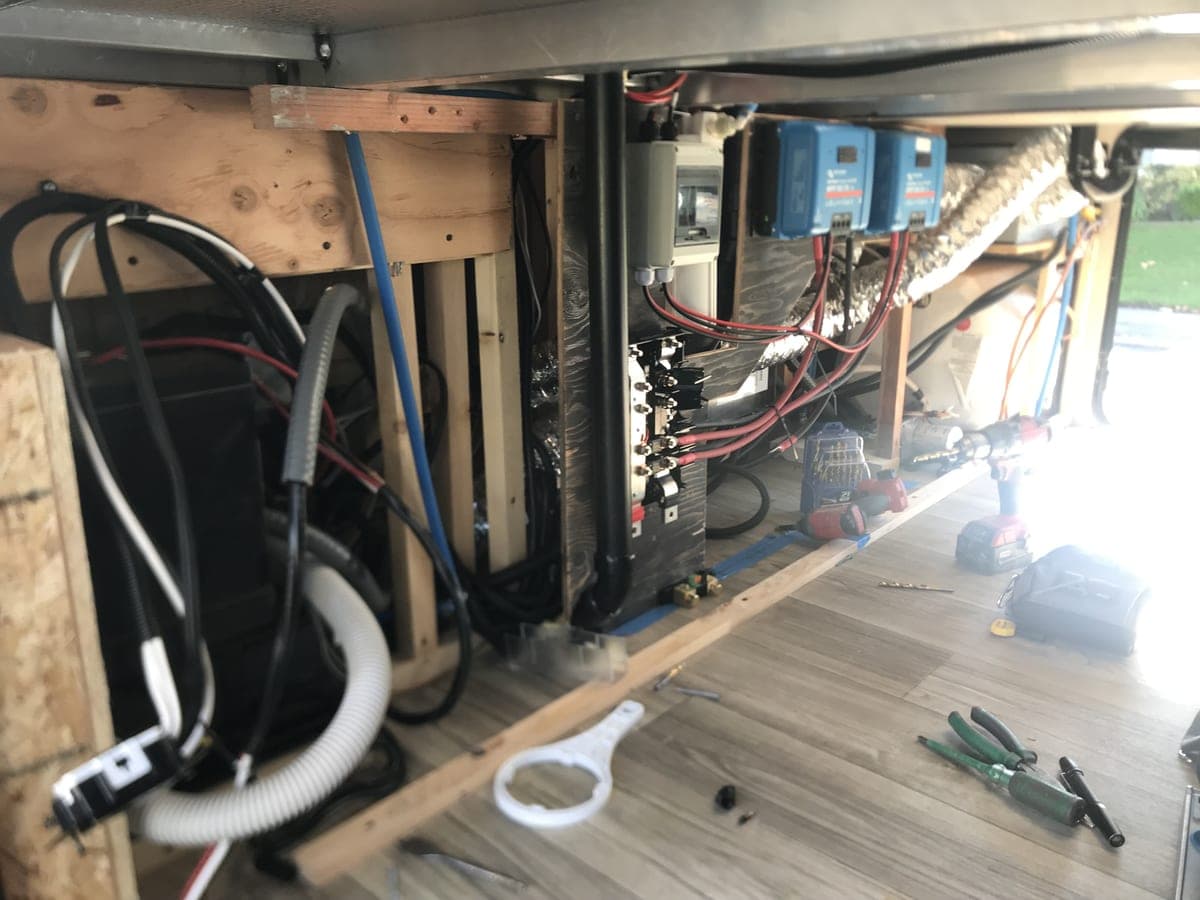
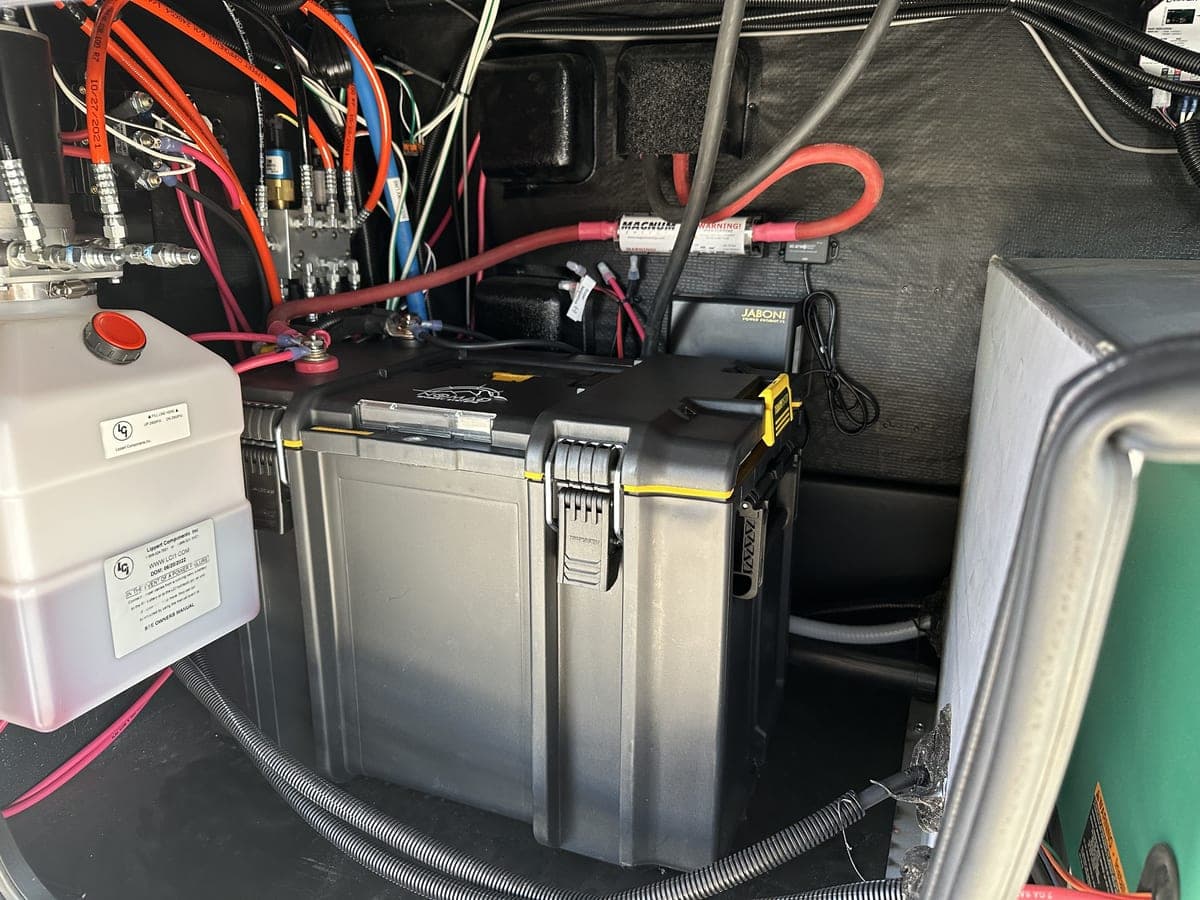
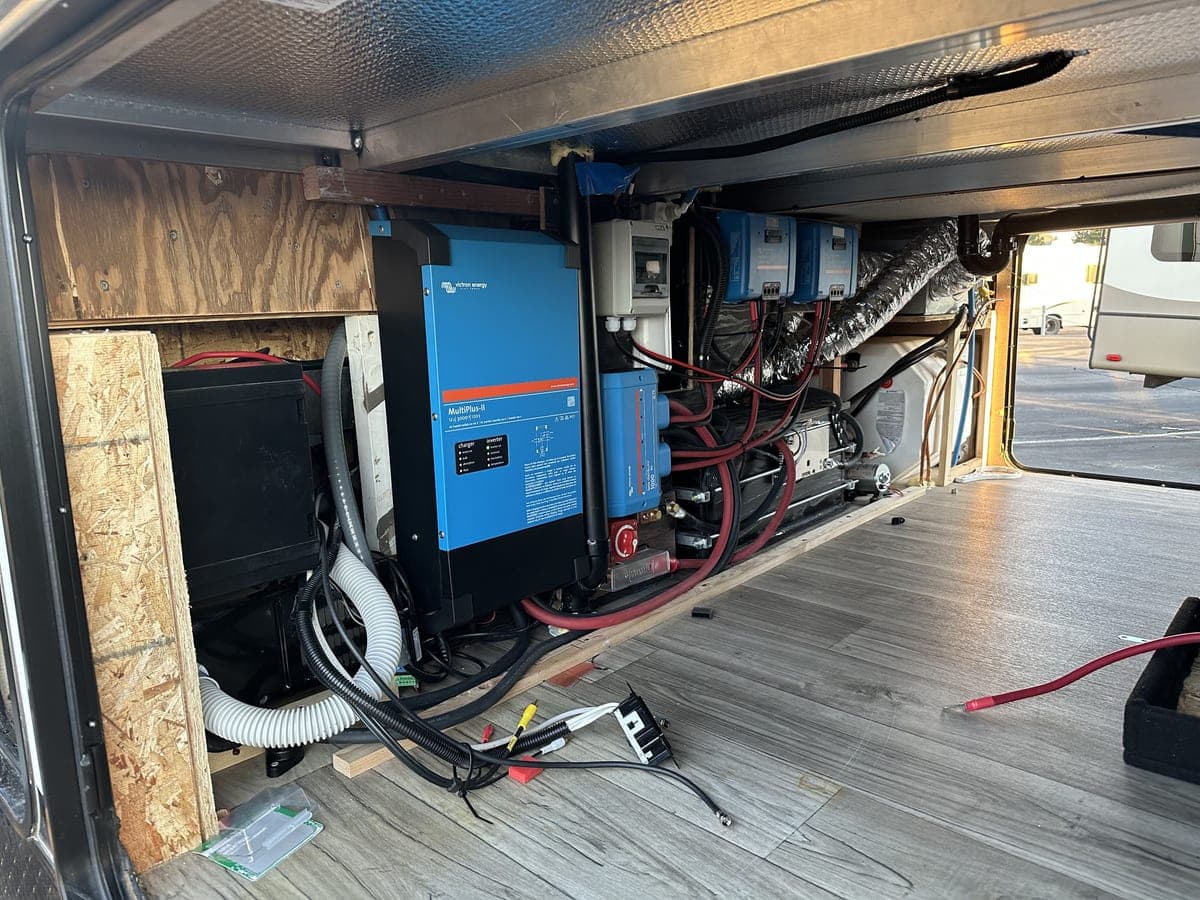
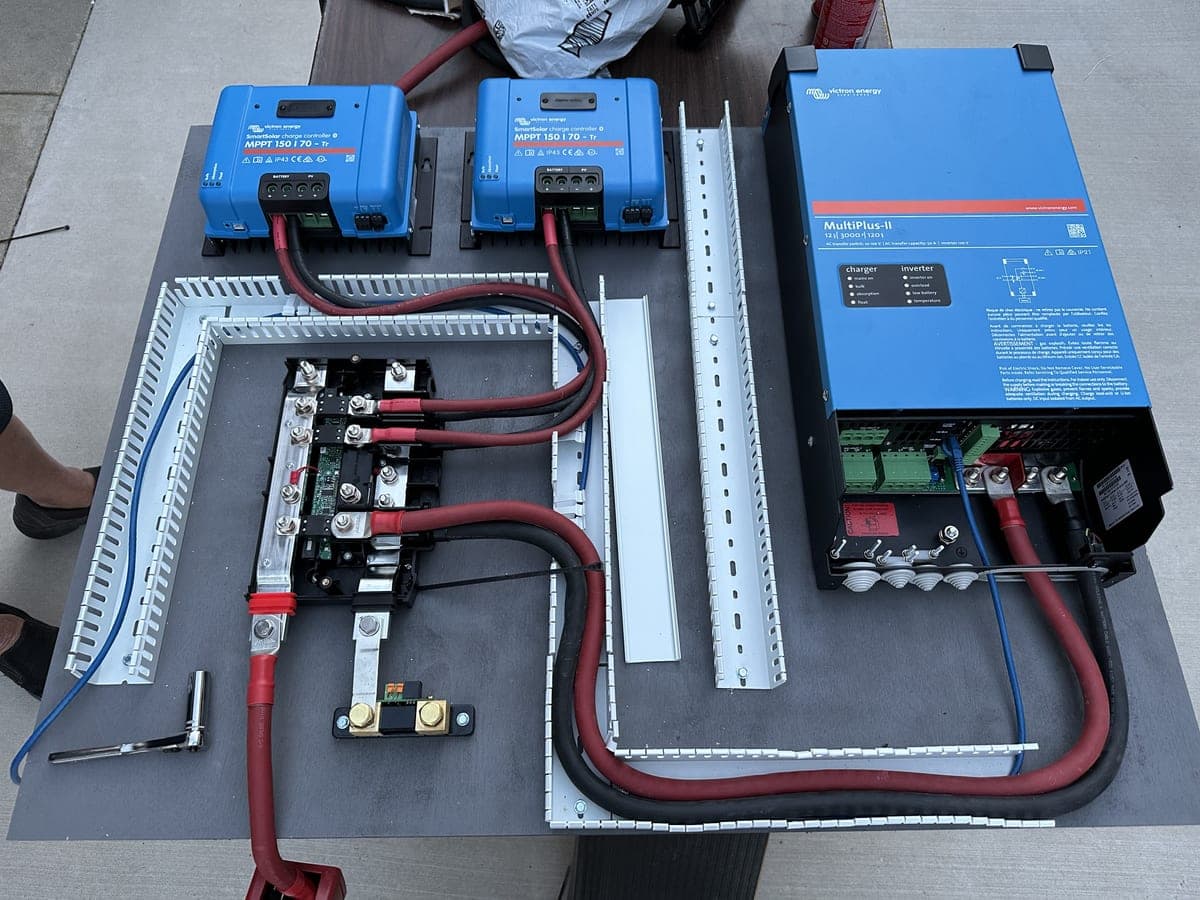
- 400 Ah LiFePO4 bank — built in-house, Class-T fused on the positive bus, low-temp cutoff wired to the chassis battery sense
- Victron MultiPlus-II 3000 — pure sine, 120 A charger, power-assist enabled for the 30 A pedestal sites they hit in transit
- Orion-Tr Smart 30A DC-DC — proper alternator-to-house charging via 4 AWG, replacing the factory 10 AWG that was effectively a fuse
- Cerbo GX + touch display — system telemetry on the dinette wall; the kids check state of charge before turning the inverter on
What changed for them
Three nights at 9,500 ft with the residential fridge running and an electric kettle in the morning takes them from 100% to about 65% state of charge. By mid-morning the array is back to bulk. The generator stays in the bay through the whole summer.
Why we did it this way
LiFePO4 chemistry handles the cold-soak cycling at altitude that flooded lead-acid hates. The MultiPlus-II's power-assist feature lets them stay on 30 A pedestals without tripping breakers when the microwave and the air conditioner both run. The Cerbo telemetry was the customer's request — they wanted to see what the system was doing, not guess.
Build notes
Three days at the customer's site near Minden. Day one was the bay strip-out and battery box modification (the factory box wouldn't clear the LiFePO4 case dimensions). Day two was the array, the DC-DC, and the new positive distribution bus. Day three was commissioning, BMS programming, and a 4-hour shakedown loop with the family driving the rig and watching the telemetry.