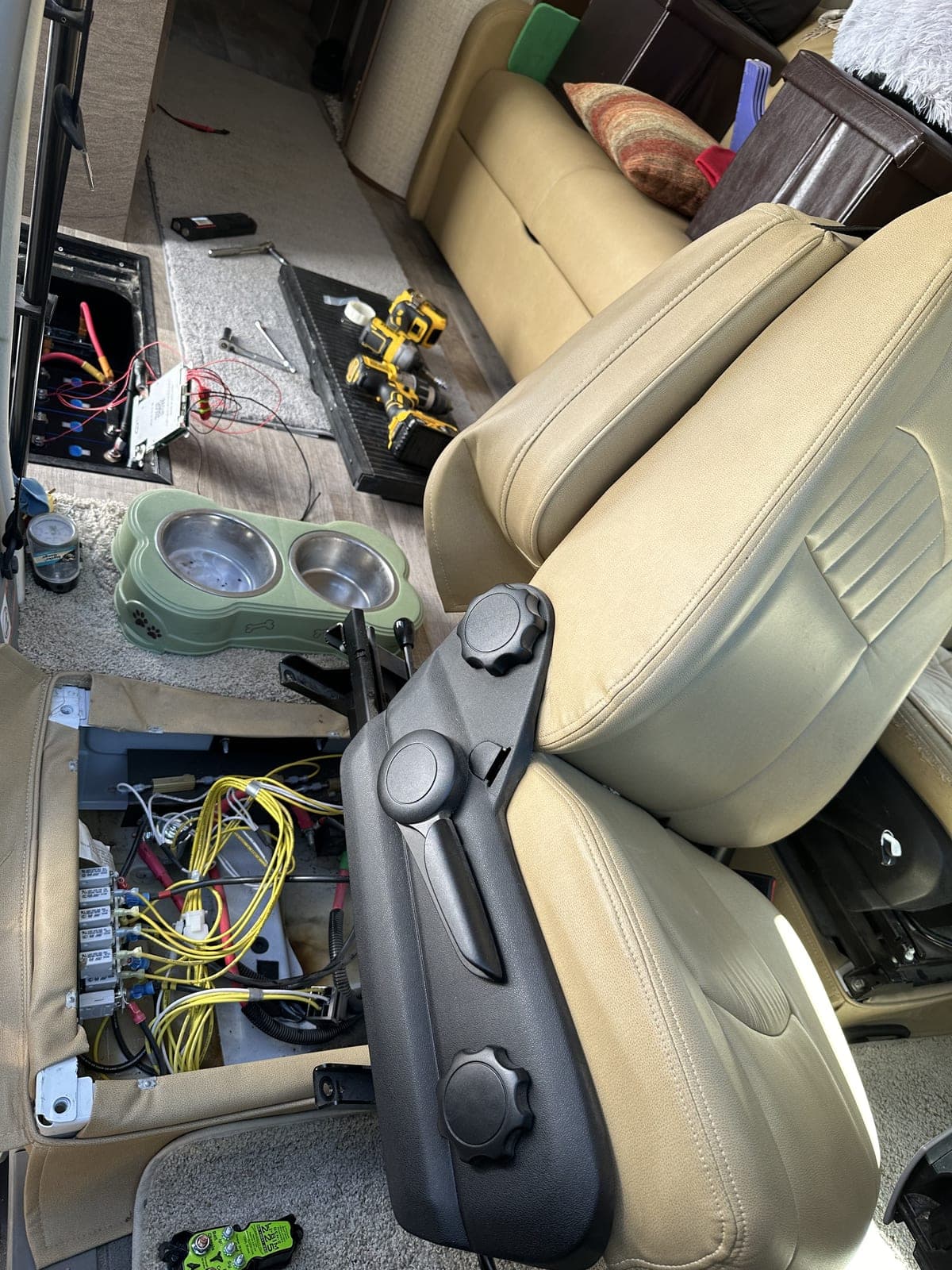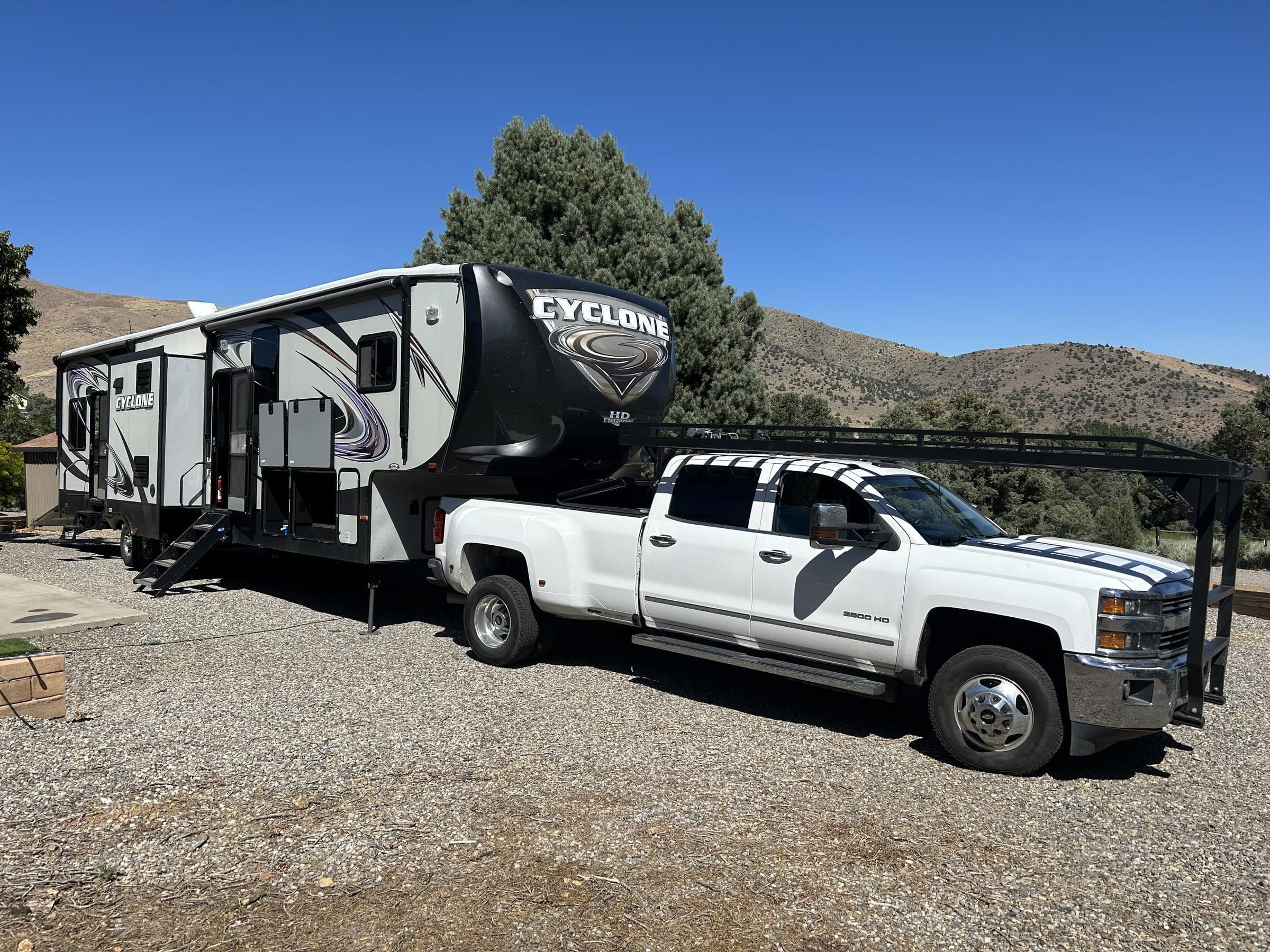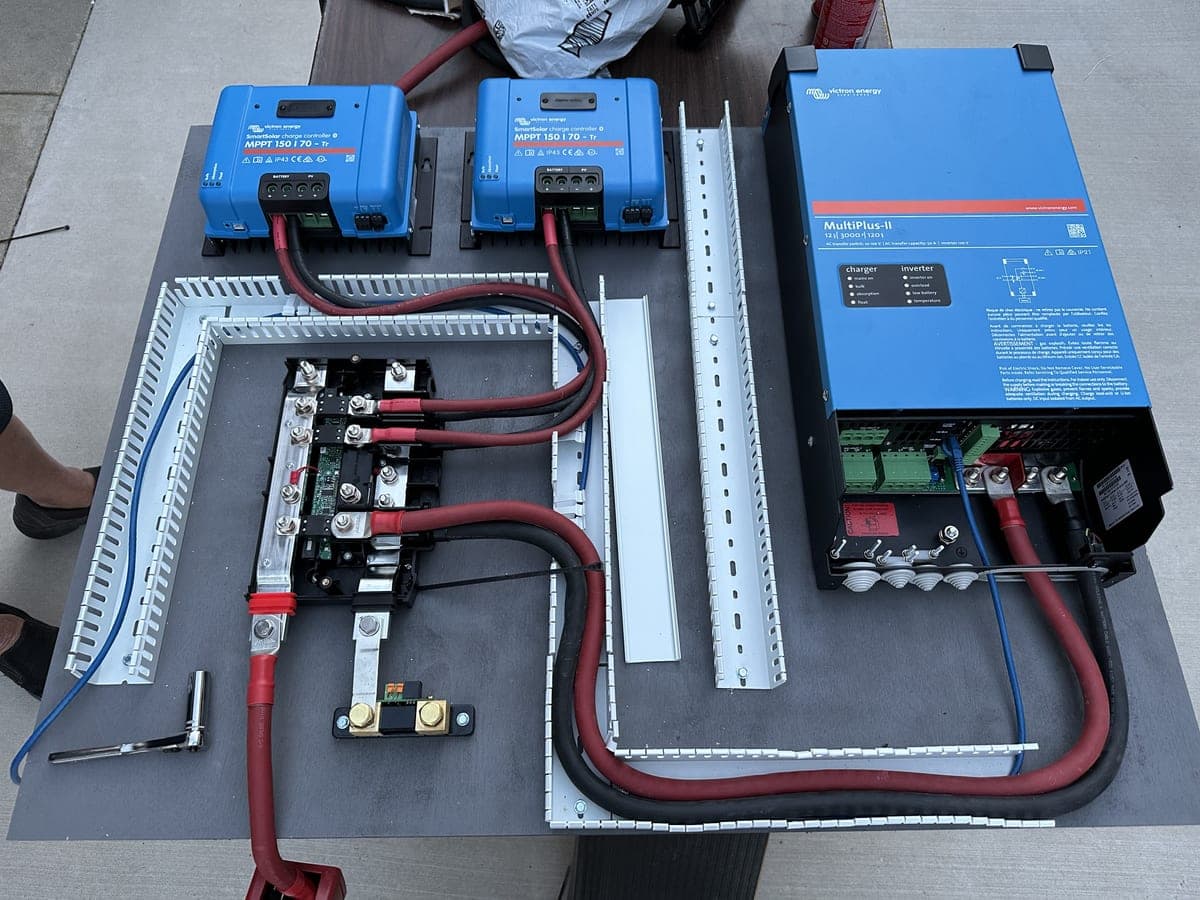
A 40-foot diesel pusher about to start full-time travel — the owners sold the house, kept the rig, and came to us in early spring with a clean directive: build the system that lets us not think about power again. The factory configuration was four 6 V golf-cart batteries, 2,000 W of inverter, and the original Onan diesel generator doing most of the work.
What we replaced
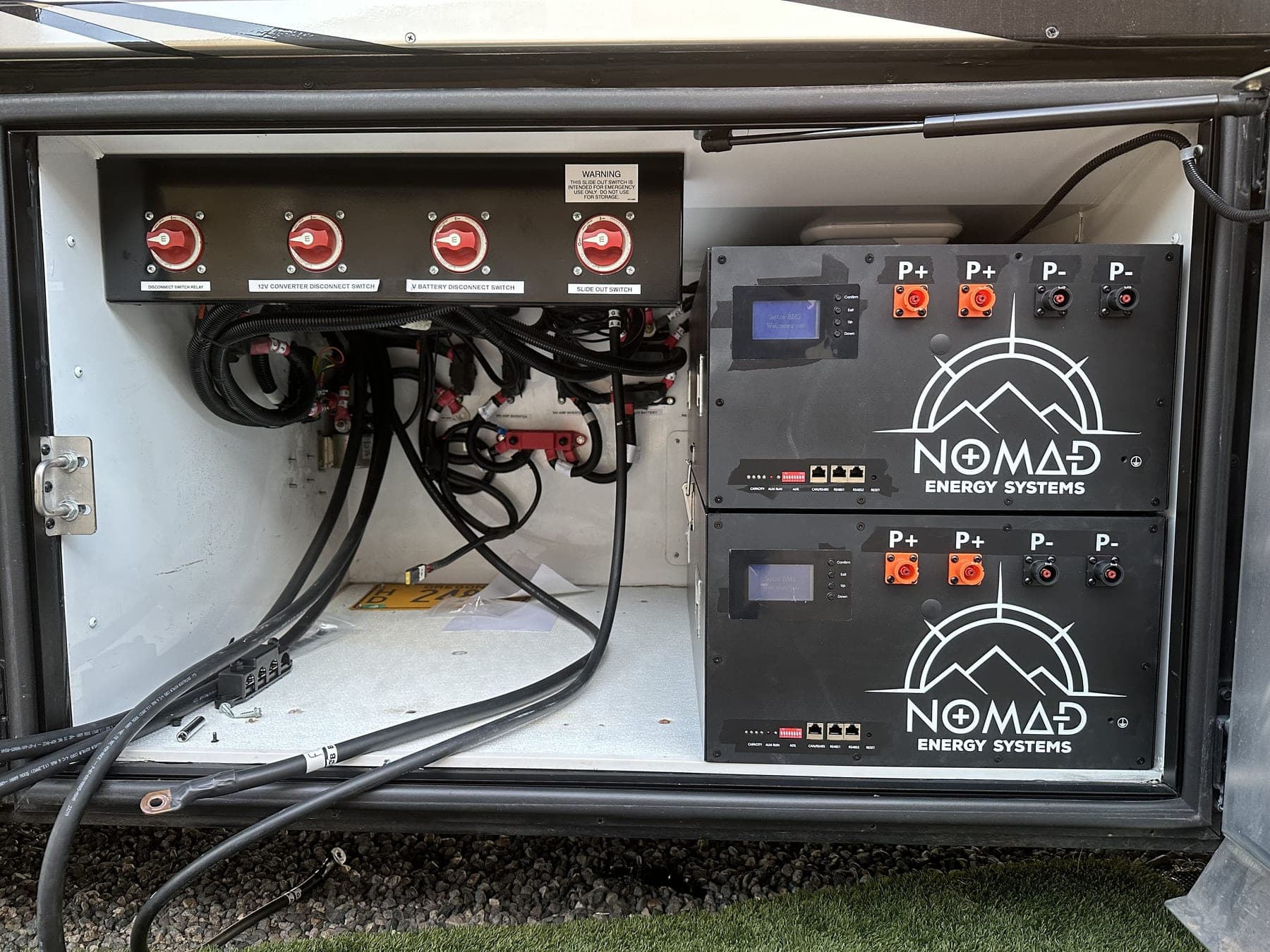
The factory bay had a 600 Ah AGM bank that was about a year past its service life, an inverter/charger pair from two different manufacturers, and a parallel-charge solenoid wiring harness that had been added by a previous owner without proper fusing. The bay itself was usable but cluttered — half a dozen single-purpose controllers each on their own breaker, none of them talking to each other.
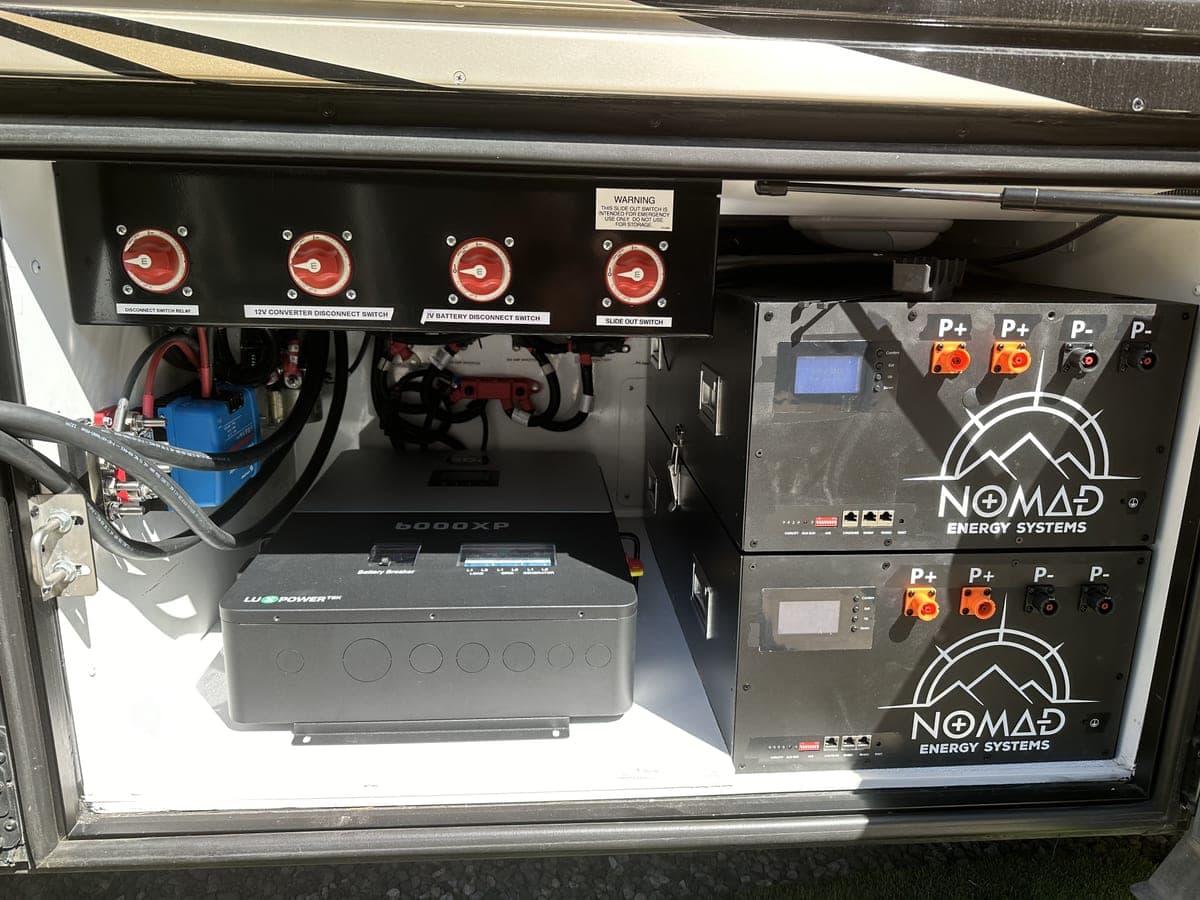
What's in there now
- 2,040 W rooftop array — six 340 W panels in two MPPT-paired strings, plenty of headroom for the desert winter when they'll be parked at low pitch
- 30 kWh Nomad Energy Systems bank — custom 12 V 2,400 Ah LiFePO4 build, four cells per string, Class-T fused, balance leads brought to a service panel for in-bay diagnostic access
- Two MultiPlus-II 12/3000 in parallel — about 4.8 kW continuous at 120 V single-phase, power-assist enabled for the 30 A and 50 A sites the rig will rotate through
- Two SmartSolar 250/100 MPPTs — paired to the array's two strings, each independently optimized for shade
- Cerbo GX + 7" touch display — the dashboard the customer asked for; they can see total system state from the captain's chair or the bedroom
What changed for them
The first month after delivery they tracked generator hours: zero. The second month was all summer travel through Oregon and the California coast — still zero. The Onan stays in the bay as a redundancy they hope they never need; the array and bank cover everything the rig draws, including the residential fridge, the washer/dryer cycle, and the induction cooktop the previous owner had also added without thinking through the load math.
Why we did it this way
The 12 V architecture was a deliberate choice over 48 V — the rig's existing DC distribution was 12 V end-to-end, the inverters they wanted (MultiPlus-II 12/3000) are mature platforms with strong field data, and the bank size at 12 V keeps the parts catalogue simple for roadside diagnostics. A 48 V system would have been more compact but would have required converters at every existing 12 V load.
Build notes
Five days on-site at our Carson Valley base. The customer drove the coach to us — easier than us bringing the shop to a 40-foot pusher. Day one was the strip-out and the battery bank assembly on a wheeled cart for in-place testing. Day two was the array and the rooftop combiners. Days three and four were the inverter installation, the new positive distribution, and the Cerbo wiring. Day five was commissioning, a 6-hour shakedown drive over the Carson Range, and walk-through with the customer on system telemetry.